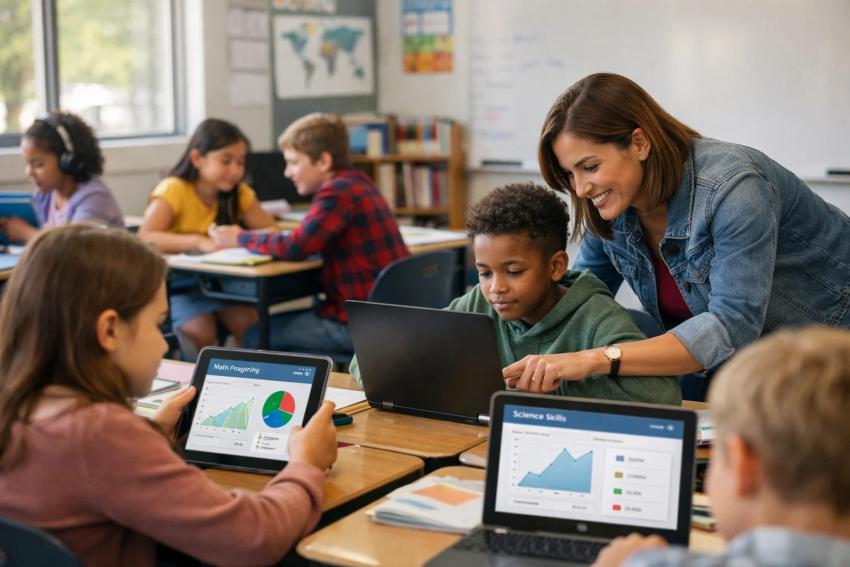
Education is undergoing a rapid transformation, driven by technology, changing workforce demands, and evolving student expectations. Over the next decade, the traditional classroom model will shift toward a more flexible, data-driven, and student-centric approach. Schools will no longer rely solely on standardized teaching methods but will embrace innovation to meet individual learning needs and prepare students for a dynamic future.
The Rise of Technology-Driven Learning
In the coming years, technology will become the backbone of education systems worldwide. Tools powered by artificial intelligence, machine learning, and cloud computing will enable schools to deliver smarter and more efficient learning experiences. Virtual classrooms, augmented reality, and interactive simulations will make learning more immersive, helping students grasp complex concepts faster. As digital infrastructure improves, access to quality education will expand beyond physical boundaries.
Personalized Learning Will Become the Norm
One of the most significant changes in education will be the shift toward individualized learning experiences. Instead of following a rigid curriculum, students will learn at their own pace based on their strengths, weaknesses, and interests. Advanced systems will analyze student performance in real time and adapt content accordingly. This approach will not only improve academic outcomes but also boost student engagement and confidence.
The Role of Teachers Will Evolve
Teachers will remain essential in the education system, but their roles will evolve significantly. Rather than focusing primarily on delivering lectures, educators will act as mentors, facilitators, and guides. With automation handling repetitive tasks like grading and assessment, teachers will have more time to focus on student development, critical thinking, and emotional support. This shift will create a more meaningful and impactful teaching experience.
Data-Driven Decision Making in Schools
Schools will increasingly rely on data to make informed decisions. From tracking student progress to identifying learning gaps, data analytics will play a crucial role in improving educational outcomes. Administrators will use insights to refine teaching strategies, allocate resources effectively, and ensure that no student is left behind. This data-centric approach will make education systems more efficient and responsive.
The Emergence of AI-Powered Learning Platforms
As schools embrace digital transformation, platforms like JoraIQ are shaping the future of education by offering innovative solutions tailored to modern learning needs. JoraIQ focuses on AI personalized learning for schools, enabling institutions to deliver customized learning paths, adaptive assessments, and real-time performance tracking. By leveraging intelligent systems, JoraIQ helps educators identify student weaknesses, provide targeted support, and enhance overall learning outcomes. Such platforms are becoming essential tools for schools aiming to stay competitive and future-ready.
Preparing Students for Future Careers
The next decade will place a strong emphasis on skills rather than rote learning. Critical thinking, problem-solving, creativity, and digital literacy will become core components of education. Schools will align their curriculum with industry demands, ensuring students are equipped for emerging careers in technology, data science, and beyond. Lifelong learning will also become a key focus, as individuals continuously upgrade their skills in a fast-changing world.
Conclusion
The future of education is set to be more personalized, technology-driven, and student-focused than ever before. As schools adopt innovative tools and strategies, the learning experience will become more engaging, efficient, and impactful. With the integration of advanced platforms like JoraIQ and a strong focus on individual growth, education in the next 10 years will empower students to reach their full potential and thrive in an increasingly complex world.