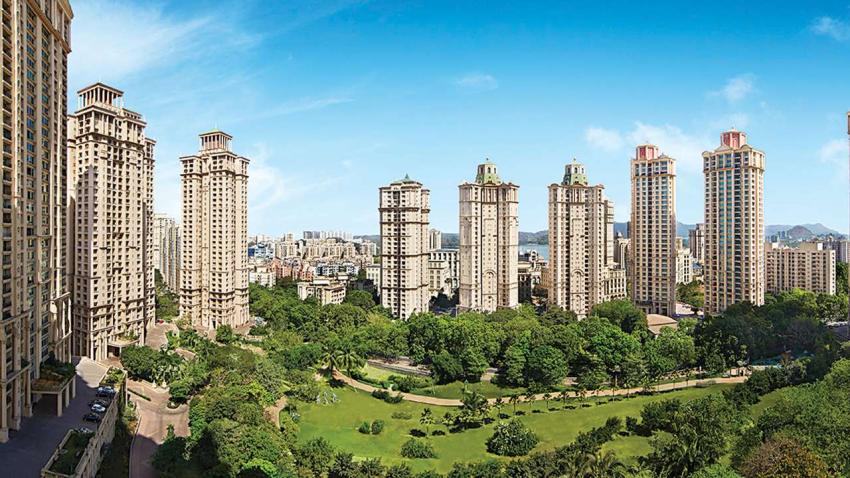
Buying a property in Mumbai is one of the most significant financial decisions you will ever make — and honestly, one of the most emotionally charged ones too. Think of it like climbing Mount Everest: the view from the top is absolutely worth it, but you need the right gear, the right guide, and a clear understanding of every step along the way. Mumbai is not just India's financial capital; it is a city of dreams, aspirations, and yes, sky-high real estate prices. Whether you are a first-time buyer dreaming of a cozy 2 BHK or a seasoned investor eyeing premium 3 BHK flats in Mumbai, this guide has been written specifically to walk you through every aspect of the buying process in the current market landscape.
The Mumbai real estate market operates on its own rules. What works in Pune or Bangalore doesn't necessarily translate here. The city's unique geography — hemmed in by the Arabian Sea on three sides — means land is perpetually scarce, demand never truly cools off, and prices tend to move in only one direction over the long term. Whether you are looking to buy property in Mumbai for end-use or investment, understanding the market's pulse is non-negotiable. Over the next several thousand words, we are going to cover everything from location selection and property types to legal formalities and stamp duty, so you walk away feeling genuinely prepared.
Why Mumbai's Real Estate Market Still Commands Attention in 2026
Let's get one thing straight: Mumbai is not a cheap city to own property in — and it never will be. But "expensive" and "bad investment" are two very different things, and confusing them is a mistake that costs buyers dearly. Mumbai's real estate market in 2026 is witnessing a powerful wave of appreciation across all segments, with residential rates now ranging from ₹12,000 to over ₹1,20,000 per square foot. That is an enormous range, and it tells you something important: this city has room for almost every kind of buyer, from someone looking for budget flats in Mumbai's outer suburbs to someone hunting for a luxury penthouse in Bandra.
The fundamental drivers of Mumbai's real estate story haven't changed, and they're not going to change anytime soon. Mumbai's business opportunities attract people from all over the globe, and the city's population has grown by 8.2% with the latest population numbers reading 22,089,000. More people means more demand for housing, and more demand with limited supply means prices stay buoyant. Mumbai remains the country's most valuable housing market, contributing nearly one-third of total sales across top cities, ranging from compact flats in Thane and Navi Mumbai to luxury towers in South Mumbai. That is a staggering statistic that underscores just how central this city is to India's overall real estate economy.
What's equally compelling is the infrastructure story. The completion of mega projects like the Mumbai Coastal Road and the ongoing development of the Navi Mumbai International Airport are reshaping connectivity and, by extension, property values in entire corridors that were previously considered secondary. Continuous infrastructure expansion, combined with strong employment and lifestyle-driven relocation, keeps buyer sentiment positive. For someone thinking about where to buy home in Mumbai, that infrastructure angle is not a minor footnote — it is one of the most powerful price appreciation levers in the market today.
Key Market Statistics You Need to Know Right Now
Numbers tell the real story in real estate, and the current Mumbai data is worth paying close attention to. Mumbai's residential sector saw prices climb by about 7% year-on-year in Q3 2025, driven by solid demand in premium and luxury segments, with the city recording 24,706 units sold — a 2% increase — despite challenges like affordability pressures. This is significant because even during periods of global economic uncertainty, the Mumbai residential market has displayed remarkable resilience. Average property prices have grown by 4 to 6% year-on-year across most Mumbai micro-markets, with over 60% of sales now in the ₹1 crore-plus segment. The premium shift isn't just a trend — it reflects a fundamental change in buyer demographics and aspirations in this city.
Understanding the Different Types of Property in Mumbai
Before you start visiting sites and talking to brokers, it pays to understand what kind of property you are actually looking for. The Mumbai market offers a wide spectrum — from compact studio apartments and 1 BHK units to sprawling 4 BHK luxury residences with private terraces and panoramic sea views. Each category comes with its own pricing dynamics, pros and cons, and ideal buyer profile. Getting clarity here early will save you enormous time and heartache later.
Ready-to-Move vs. Under-Construction Flats in Mumbai
One of the first choices you'll need to make when looking at flats in Mumbai is whether to go for a ready-to-move property or an under-construction one. Both have distinct advantages, and your decision should depend on your timeline, risk appetite, and budget. Ready-to-move properties give you the comfort of seeing exactly what you're buying, allow for immediate possession, and come without the risk of construction delays. On the downside, they typically cost more, and you don't get the benefit of customizing interiors. You also pay GST on under-construction properties (currently 5% for non-affordable housing) but not on ready-to-move units, which can make a meaningful difference in your total outgo.
Under-construction properties, by contrast, offer early-bird pricing that can translate into significant appreciation by the time you get possession. The value of under-construction real estate in Mumbai is significantly less compared to ready-to-move-in options, ensuring appreciation, while pre-launch projects ensure a great return on investment.
Developers also typically offer more customization flexibility in new projects — you can choose flooring, fittings, and sometimes even layout modifications. Developers are introducing cutting-edge features in luxury residential projects in Mumbai, including modern amenities and smart home technologies, to cater to evolving preferences. The key risk, however, is delays, which is precisely why RERA (Real Estate Regulatory Authority) verification has become non-negotiable for under-construction purchases.
2 BHK Property in Mumbai — The Sweet Spot for Most Buyers
Ask any real estate professional in the city and they will tell you that a 2 BHK property in Mumbai is the most sought-after configuration in the market. It represents the perfect balance between affordability and comfortable living space, making it ideal for young nuclear families, newlyweds, and first-time homebuyers alike. A well-chosen 2 BHK in a good suburban location gives you everything you need without stretching your finances to the breaking point — which is a very real risk in a city where prices can make your head spin.
The pricing of 2 BHK flats in Mumbai varies dramatically by location. In the western suburbs like Andheri or Malad, you're looking at anywhere between ₹1.5 crore and ₹2.5 crore for a reasonably sized unit. Move further east toward Thane or Navi Mumbai, and the same budget can get you a considerably larger apartment in a newer project with better amenities. In premium areas like Bandra or Juhu, a 2 BHK easily crosses ₹3 to ₹5 crore. The key is to define your lifestyle priorities — proximity to workplace, school quality, social infrastructure — and then find the micro-market that fits those priorities within your budget envelope. Don't make the mistake of buying something cheap in an area where you'll end up spending a fortune on commuting.
3 BHK Flats in Mumbai — Space, Comfort, and Long-Term Value
If budget is not the primary constraint and you're thinking with a long-term lens, 3 BHK flats in Mumbai are arguably the most rewarding investment in the city. Growing families, joint households, and professionals who work from home often find that the extra room transforms their quality of life. Beyond the lifestyle upgrade, 3 BHKs also tend to hold value extremely well — they attract a wider pool of buyers during resale and command stronger rental premiums in established localities. From a pure investment standpoint, they're harder to liquidate quickly than a 2 BHK in the same locality, but the per-square-foot appreciation over a 7-10 year horizon is typically comparable or better.
Currently, in suburbs like Powai, Goregaon, and Kandivali, you can find well-designed 3 BHK flats in the ₹2.5 crore to ₹4.5 crore range, often in gated communities with clubhouses, swimming pools, and round-the-clock security. In Thane and Navi Mumbai, similar configurations are available for significantly less, which explains why home seekers are now shifting to towns like Thane, Navi Mumbai, and Panvel, which offer better property prices, improved infrastructure, and quality lifestyle options. If you're buying to buy home in Mumbai for your family's long-term comfort, a 3 BHK in one of these emerging corridors might actually deliver better value than a similarly priced 2 BHK in a more central location.
Best Areas to Buy a Home in Mumbai
Location is everything in real estate, and in Mumbai, choosing the right micro-market can mean the difference between a great investment and a mediocre one. The city is broadly divided into South Mumbai, Central Mumbai, Western Suburbs, Eastern Suburbs, and extended regions like Thane and Navi Mumbai. Each belt has its own character, price range, and investment thesis.
South Mumbai — Prestige at a Premium
South Mumbai is where India's wealthiest addresses are, and the price tags reflect that unambiguously. Average property prices in South Mumbai in 2025 range between ₹52,500 and ₹1,01,000 per square foot, reflecting India's highest luxury housing values. Iconic localities like Altamount Road, Napean Sea Road, Cuffe Parade, and Marine Lines are not just addresses — they are statements of social standing. If you have the budget and value exclusivity, legacy value, and an unmatched lifestyle quotient, South Mumbai properties offer something genuinely irreplaceable. The downside is that inventory is extremely limited and new supply is practically non-existent, which means you're almost always looking at older buildings or rare premium new projects.
Western Suburbs — The Preferred Choice for Families
Stretch from Bandra to Borivali, and you have what many consider the most livable and well-rounded part of Mumbai. The western suburbs offer an exceptional combination of connectivity, social infrastructure (schools, hospitals, malls, restaurants), and a variety of property options across price points. The most expensive real estate in Mumbai is in areas such as Bandra (east and west) and Juhu, where the average cost per square foot is between ₹35,000 to ₹55,000.
As you move further north toward Andheri, Goregaon, Malad, Kandivali, and Borivali, prices become progressively more affordable without sacrificing on quality of life. The upcoming metro lines cutting through the western suburbs are adding further momentum to property appreciation in this belt, making it an excellent zone to buy property in Mumbai right now before those infrastructure premiums are fully priced in.
Navi Mumbai and Thane — Smart, Affordable Alternatives
Here's a question worth asking: why spend ₹2 crore on a compact 1 BHK in Andheri when the same money can get you a spacious 2 BHK in Kharghar or a well-appointed 3 BHK in Thane? The satellite cities of Navi Mumbai and Thane have matured enormously over the past decade and today offer a quality of living that rivals many parts of Mumbai proper. Mulund, for instance, known for its greenery, schools, and social infrastructure, has become a favorite among families and first-time buyers, with an average price of ₹14,500 per sq ft in 2025 and a rental yield of approximately 3.6%. The forthcoming Navi Mumbai International Airport is expected to be the biggest transformative event for property prices in the Navi Mumbai region — buying before the airport is fully operational is widely seen as a smart move by real estate analysts.
How Much Does It Really Cost to Buy Property in Mumbai?
This is where most buyers get their first shock — and understandably so. Mumbai is not just expensive at the sticker price; the total cost of acquisition can be 10-15% higher than the quoted property value once you factor in all the associated charges. Being financially prepared for the full picture is what separates smooth transactions from stressful ones.
Price Breakdown by BHK Configuration and Location
Let's break down what you can realistically expect to pay across different configurations and geographies. Affordable 1 BHK flats in the outer suburbs start at approximately ₹60 lakh, while prime luxury residences in areas like Bandra and South Mumbai frequently exceed the ₹10 crore mark. For buyers looking at a 2 BHK property in Mumbai in mid-range suburbs like Goregaon, Kandivali, or Thane, a budget of ₹1.2 to ₹2 crore is realistic. For 3 BHK flats in Mumbai in the same localities, expect to budget ₹2 crore and above. Below is a quick comparative snapshot:
ConfigurationLocationApproximate Price Range1 BHKOuter Suburbs (Thane/Navi Mumbai)₹45 lakh – ₹80 lakh2 BHKMid Suburbs (Goregaon/Kandivali)₹1.2 cr – ₹2.2 cr2 BHKPrime Suburbs (Bandra/Andheri)₹2.5 cr – ₹4 cr3 BHKMid Suburbs (Powai/Thane)₹2.5 cr – ₹4.5 cr3 BHKSouth Mumbai / Juhu₹6 cr – ₹15 cr+
Remember, on top of the property price, you'll need to set aside funds for stamp duty, registration charges, GST (if under-construction), home loan processing fees, interior design costs, and society maintenance deposits. A prudent approach is to budget an additional 10-12% above the property price to cover all these associated costs comfortably.
The Step-by-Step Process to Buy Property in Mumbai
Knowing how to navigate the buying process is just as important as knowing what to buy. Mumbai's property purchase process involves several legal, financial, and administrative steps that must be followed in the right sequence. Skipping or shortchanging any one of them can create serious problems down the road.
Legal Checks and RERA Verification
Before you hand over any token money or sign any agreement, the very first thing you must do is verify the project and the developer on the MahaRERA portal (maharera.mahaonline.gov.in). Real Estate (Regulation and Development) Act (RERA) provides more transparency for buyers, improving investor belief. RERA registration means the developer has declared the project's timeline, specifications, and approvals — and is legally accountable for delivering what's promised. You should also conduct an independent legal title check to ensure the land is free from encumbrances, disputes, or pending litigation. This typically involves engaging a property lawyer to review the chain of title documents, the approved building plan, Occupation Certificate (OC), and Completion Certificate (CC). Yes, a lawyer's fee adds to your cost — but it is money that buys you peace of mind.
Stamp Duty and Registration Charges in Mumbai
Once you've agreed on the price and done your legal due diligence, stamp duty and registration charges are the next major financial milestone. The stamp duty rate in Mumbai is 6% for men and 5% for women, including 1% Metro Cess, calculated on the property's market value or agreement value, whichever is higher. This is a significant outgo on large properties, and women buyers enjoy a meaningful 1% concession — which on a ₹2 crore property translates into a saving of ₹2 lakh. In addition to stamp duty, a flat registration charge of 1% applies, or a fixed fee of Rs. 30,000 for properties valued over Rs. 30 lakh.
Stamp duty is calculated on the higher of the Agreement Value or Ready Reckoner Rate, and for properties above ₹50 lakh, buyers must also account for 1% TDS on the transaction. The actual payment process has become considerably more streamlined in recent years. As of 2026, the process is a hybrid of digital preparation and a brief physical visit for biometric verification at the Sub-Registrar's Office, with stamp duty paid through the Government Receipt Accounting System (GRAS). Importantly, under the Income Tax Act of 1961, homebuyers can claim a deduction for stamp duty and registration charges paid under Section 80C, which provides useful tax relief, particularly for salaried buyers in higher income brackets.
Securing Your Home Loan
For most buyers, a home loan is not optional — it is the engine that makes the purchase possible. Getting your home loan pre-approved before you start property hunting is one of the smartest moves you can make. It tells you exactly how much you can borrow, strengthens your negotiating position with developers and sellers, and speeds up the purchase process once you've finalized a property. Leading public and private sector banks currently offer home loan interest rates in the range of 8.5% to 9.5% per annum, depending on your credit profile and the loan amount. Most lenders will finance up to 75-80% of the property's value (lower for properties above ₹75 lakh), meaning your down payment will typically need to cover 20-25% of the purchase price plus all associated charges. A strong CIBIL score (750 and above) is your best friend in this process — it gets you better interest rates and faster approvals.
Common Mistakes First-Time Buyers Make (And How to Avoid Them)
Even smart, well-researched buyers can fall into predictable traps when they set out to buy home in Mumbai for the first time. Awareness of these pitfalls is the first line of defense. The most common mistake is buying purely on emotion — falling in love with a show flat, a view, or a developer's marketing pitch without doing the hard financial math. Your EMI should not exceed 40-45% of your monthly take-home income; beyond that, you're stretching yourself dangerously thin. Another mistake is ignoring the builder's track record.
Dozens of Mumbai buyers have lost sleep — and in some cases, savings — over delayed projects or developers who vanished mid-construction. Always check the developer's past project delivery history on MahaRERA before committing.
Overlooking maintenance costs is another trap that catches new buyers off guard. In premium gated communities, monthly maintenance can range from ₹5,000 to ₹20,000 or more — a recurring cost that significantly impacts your total housing budget. Mumbai's property market isn't about quick flips anymore; it is about picking the right micro-market with sustainable long-term demand.
This is expert advice worth tattooing on your brain. Don't buy in a locality simply because it's trendy right now — buy based on infrastructure depth, employment proximity, and genuine long-term demand fundamentals. Finally, never skip the legal title check, no matter how trustworthy the developer seems. The few thousand rupees you spend on a property lawyer are the best insurance money can buy.
Future Outlook — Is Now the Right Time to Buy Home in Mumbai?
This is the question everyone asks, and the honest answer is nuanced. This growth is fundamentally driven by a combination of extreme land scarcity, a post-pandemic shift toward larger luxury homes, and the completion of mega-infrastructure projects like the Mumbai Coastal Road and the Navi Mumbai International Airport. These are structural, long-term tailwinds — not temporary blips. Mumbai is entering a period of high demand and steady price escalation, supported by record property registrations, rising stamp duty collections, and healthy inventory management. That doesn't mean every sub-market or every project is a good buy right now, but it does mean that well-chosen property in Mumbai has a strong structural case for appreciation over a 5-10 year horizon.
Sustainability and Green Building trends show developers increasingly adopting IGBC and GRIHA-certified designs with solar energy, rainwater harvesting, and waste management systems, aligning with India's 2070 net-zero goals. This is worth noting for long-term buyers — green-certified buildings are expected to command a premium in resale value as environmental consciousness and regulatory requirements intensify over the next decade. If you are buying to buy property in Mumbai for self-use and you've done your due diligence, there's a strong argument that waiting too long is riskier than acting thoughtfully today. Every year of delay in a steadily appreciating market means a larger down payment, a bigger loan, and a longer road to ownership.
Conclusion
Buying property in Mumbai is not for the faint-hearted, but it is absolutely achievable — and deeply rewarding — if you approach it with clarity, discipline, and the right knowledge. This city rewards patient, well-informed buyers who understand its micro-markets, respect the legal process, and think in decades rather than months. Whether you are targeting a 2 BHK property in Mumbai in a well-connected suburban hub, exploring 3 BHK flats in Mumbai in an emerging corridor, or evaluating extended options in Thane and Navi Mumbai, the fundamentals remain the same: location, builder credibility, legal clean title, and long-term demand drivers.
Get your finances in order first, verify everything on MahaRERA, budget for the full cost including stamp duty and registration, and never skip independent legal counsel. Mumbai's real estate story has rewarded disciplined buyers consistently over decades, and there's every reason to believe it will continue to do so. Your dream home in this magnificent city is within reach — it just takes the right roadmap to get there.