There’s something oddly specific about hats.
Not shirts. Not jackets. Hats.
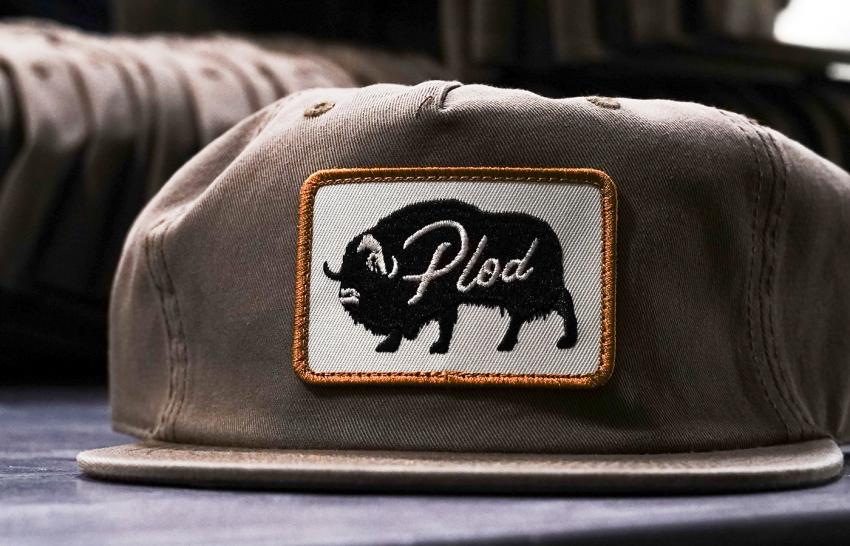
They sit higher—literally and metaphorically. Eye-level. First impression territory. You don’t accidentally wear a hat with a patch on it. You choose it. Which is why getting that patch right isn’t just a design decision—it’s a signal.
And if you’re working with custom hat patches, you’ll feel this pretty quickly: the material, the texture, even the way the edges are finished… it all changes how your brand shows up in the world.
Let’s not overcomplicate it. But let’s not treat it lightly either.
Materials: Where Most Decisions Quietly Go Wrong
Start here. Always here.
Because you can have a brilliant design—and still end up with something that feels off the moment you hold it.
Leather (or Faux Leather)
Leather patches carry weight. Not physical weight—presence.
They’re a favorite for outdoor brands, coffee roasters, woodworking shops, anything that leans rugged or “heritage-adjacent.” The appeal is obvious: they age. They darken slightly, soften, pick up character. Over time, they stop looking new—and that’s the point.
But here’s the catch: detail.
Leather doesn’t love tiny, intricate designs. Fine lines can blur. Small text can vanish into the grain. If your logo is delicate or overly complex, leather will quietly sabotage it.
Keep it bold. Simple. Confident.
Embroidered (The Classic That Still Works)
Embroidery is the old guard—and for good reason.
The thread has texture. Depth. A slightly raised feel that catches light differently depending on the angle. It’s tactile in a way print can’t replicate.
If you’ve seen baseball caps with clean, stitched logos that somehow look “finished,” this is probably why.
But embroidery has limits, too. Extremely detailed artwork can get lost in translation. Think of it like pixelation—too much detail, not enough space.
The trick? Simplify without losing identity.
Good custom patch makers will guide you here. Great ones will push back when your design won’t translate cleanly. That pushback? It’s a good sign.
Woven Patches (When Precision Matters)
Woven patches don’t shout. They whisper.
Instead of raised stitching, the threads are tighter, flatter, and more controlled. That means sharper detail. Cleaner lines. Smaller text that actually remains legible.
If your design leans toward intricate—fine typography, subtle gradients, complex linework—woven might be your best bet.
They don’t have the same texture as embroidery, though. Some people miss that dimensional feel. Others prefer the crispness.
It’s a trade-off. Always is.
PVC and Rubber (The Outliers)
These are different. You’ll know instantly.
PVC patches feel modern. Slightly industrial. Waterproof, flexible, and built for environments where fabric struggles—outdoor gear, tactical use, heavy wear.
They’re bold. Often high-contrast. Hard to ignore.
But they don’t fit every brand. A boutique lifestyle label using rubber patches? That can feel mismatched. On the flip side, a tactical brand using soft embroidery might seem… too gentle.
Again, alignment matters more than trend.
Styles: Shape, Edge, and That Subtle First Impression
Once the material is locked, style takes over.
This is where things get visual fast—and where small decisions create disproportionate impact.
Shape: Not Just Circles and Squares
Sure, you can go circular. Rectangular. Safe choices.
But die-cut patches—ones shaped around your design—have a different energy. They feel intentional. Less like a label, more like an object.
There’s a caveat: complex shapes can increase production difficulty. And cost. So it’s a balance between creativity and practicality.
Ask yourself: Does the shape add meaning, or just decoration?
Borders: Clean vs. Classic
You’ve got two main directions:
Merrowed edge: that thick, rounded border you’ve probably seen on vintage patches. Durable. Traditional. Slightly nostalgic.
Heat-cut (or laser-cut): sharper, cleaner edges that follow complex shapes more precisely.
Merrowed edges feel familiar. Heat-cut edges feel modern.
Neither is “better.” They just tell different stories.
Attachment: The Part People Forget
This one sneaks up on people.
Hats aren’t like jackets—you don’t want bulky stitching messing with comfort or structure. So the backing choice matters.
Sew-on: reliable, permanent, a bit more effort
Heat-press: faster, but depends heavily on application quality
Velcro: niche, but useful for interchangeable designs
For hats, heat-press combined with proper stitching reinforcement often strikes a balance. But if longevity is the priority, stitching still wins.
Every time.
Ordering: Where Good Ideas Either Hold or Fall Apart
This is the part no one romanticizes. But it’s where things go right—or sideways.
You’ve picked the material. Refined the style. Now you’re dealing with production.
And here’s a small truth: not all custom patch makers operate at the same level. Some will say “yes” to everything. Even when they shouldn’t.
Be cautious of that.
Samples Aren’t Optional
If someone skips the sampling stage, that’s a red flag.
A physical sample reveals things a digital mockup can’t—thread tension, color accuracy, edge finishing. What looks perfect on screen can feel underwhelming in hand.
Get the sample. Always.
Minimums and Scaling
Some manufacturers require high minimum orders. Others are more flexible.
If you’re testing a new design, committing to a massive batch is risky. But if you’re scaling an established product, small runs can get expensive fast.
There’s no universal rule here—just match your order size to your certainty level.
Communication Is the Real Metric
You can tell a lot from how a manufacturer communicates.
Do they ask questions about your design? Do they point out potential issues? Or do they just take the file and move forward?
The best partners don’t just execute. They interpret. They catch problems before they become costly mistakes.
It’s less about finding someone who can make patches—and more about finding someone who cares how they turn out.
A Slight Detour (But Stay With Me)
Think about the last hat you actually liked.
Not one you owned. Once you notice.
Chances are, it wasn’t just the logo. It was the combination—the material, the texture, the way the patch sat on the cap. It felt cohesive.
That’s the goal.
Not perfection. Cohesion.
So… What Actually Matters?
Not everything. Just a few things done well.
Material that matches your brand’s personality
A design that respects the limits of that material
Clean execution—edges, stitching, finishing
A manufacturer who doesn’t treat your order like a transaction
That’s it.
No secret formula. No hidden trick.
Just decisions that stack in your favor instead of quietly working against you.
Because in the end, a hat patch isn’t just a decoration.
It’s a small, stubborn piece of identity—sitting right at eye level, waiting to be noticed.