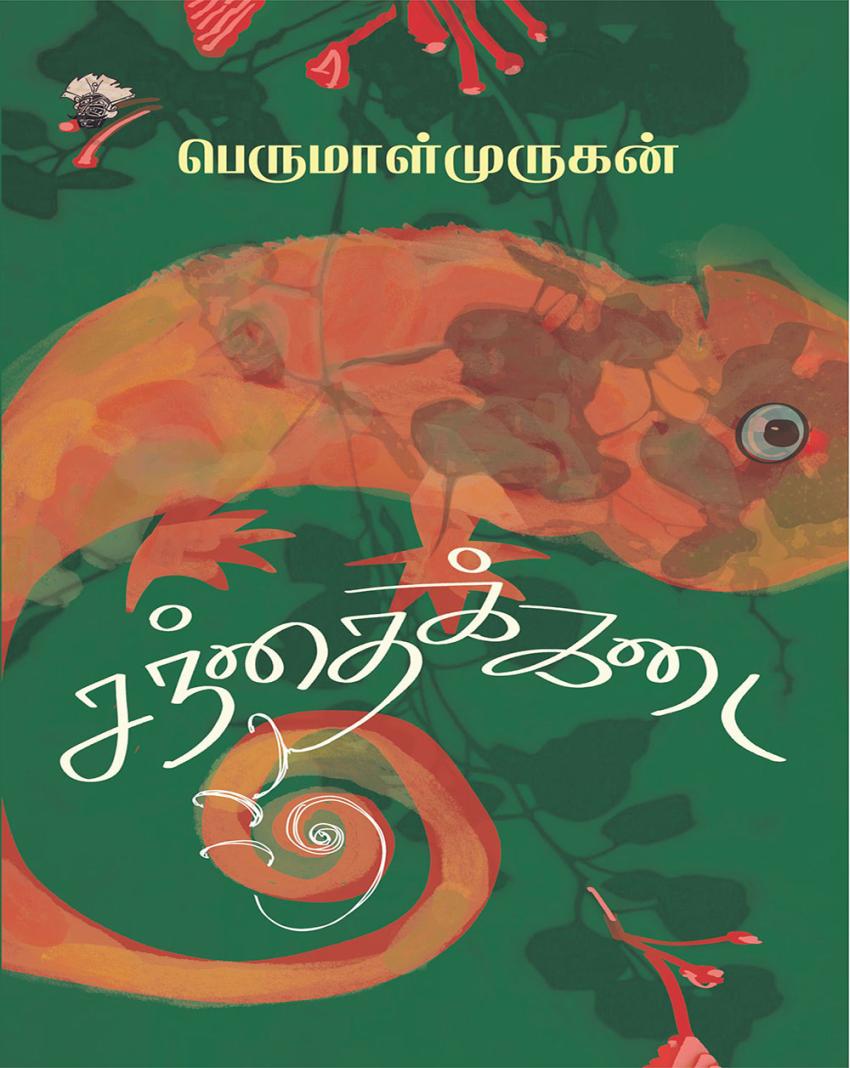
The collection of short stories Santhaikkadai is deeply rooted in thoughtful dialogues and the finely detailed description of settings. All the stories are marked with a subdued yet resolute investigative tone, where the characters are engaged in the task of discovering the truth, weighed down on one side by emotions yet on the other side, guided by reason. The world of the narrative remains a balanced world, where reason does not suppress the emotions yet imparts a clear understanding to the characters of the situation they are in.
Rather than offering answers, the storytellers in சந்தைக்கடை pose questions to life. They observe life with a cool, logical eye, searching for answers without succumbing to sentimentality even when emotionally involved in it. Then, there is tradition, and tradition is not blindly followed. Instead of direct defiance of tradition, it is countered with cleverness and adaptability on the part of the characters. There is a deep-seated reality in the stories, which remains with one long after it has been finished reading because of this subtle defiance.
The stories in this anthology grow into an entire vision, which is one of its most fascinating qualities. Every story has the quality of a picture, growing bigger to encompass several levels of change and time that run through it. The natural points of convergence for past and present evoke the fragmentary and continuous nature of real-life experience itself. The stories in The Woman Upstairs do not happen in a particular moment in time; they hold pieces of an evolving past, history, and individual identities.
The contemporary notion of freedom is seen often in the collection with people always being strictly governed by certain social codes, in spite of the economic freedom promised by this new age. Most stories actually begin or appear to conclude right when people find a release from this invisible binding. It is often a subtle point—the moment of a realization, a decision, or a passive response that speaks louder than words to where all these stories actually are set.
There is a restraint in the narrative style of Perumal Murugan. He captures moments of possible explosion-small points from where larger upheavals can arise using simple yet meaningful language, then calmly and composedly moves past them. It is from this purposeful understatement that the enduring power of the stories arises. Rather than being told what to think, the reader is coaxed into thinking.
In the larger canvas of Tamil literature today, such anthologies reassure one about the persisting appeal of sirukathaigal in tamil nagercoil, where local textures meet the universe. Among readers attuned to story books in nagercoil, santhaikkadai emerges as a book that conveys regional sensitivity and philosophical nuance. A collection of stories, santhaikkadai gets dismantled into nuanced narratives of dispossession how people change, silently and reflectively, though never with less determination to make sense of their world.
Santhaikkadai has stories that result from the power of dialogue and descriptions that lead to inquiry at every level of the stories. The emotions and logic of the people interact to release the rigid boundaries of society by subtlety capturing the moments of transformation using just the right words.