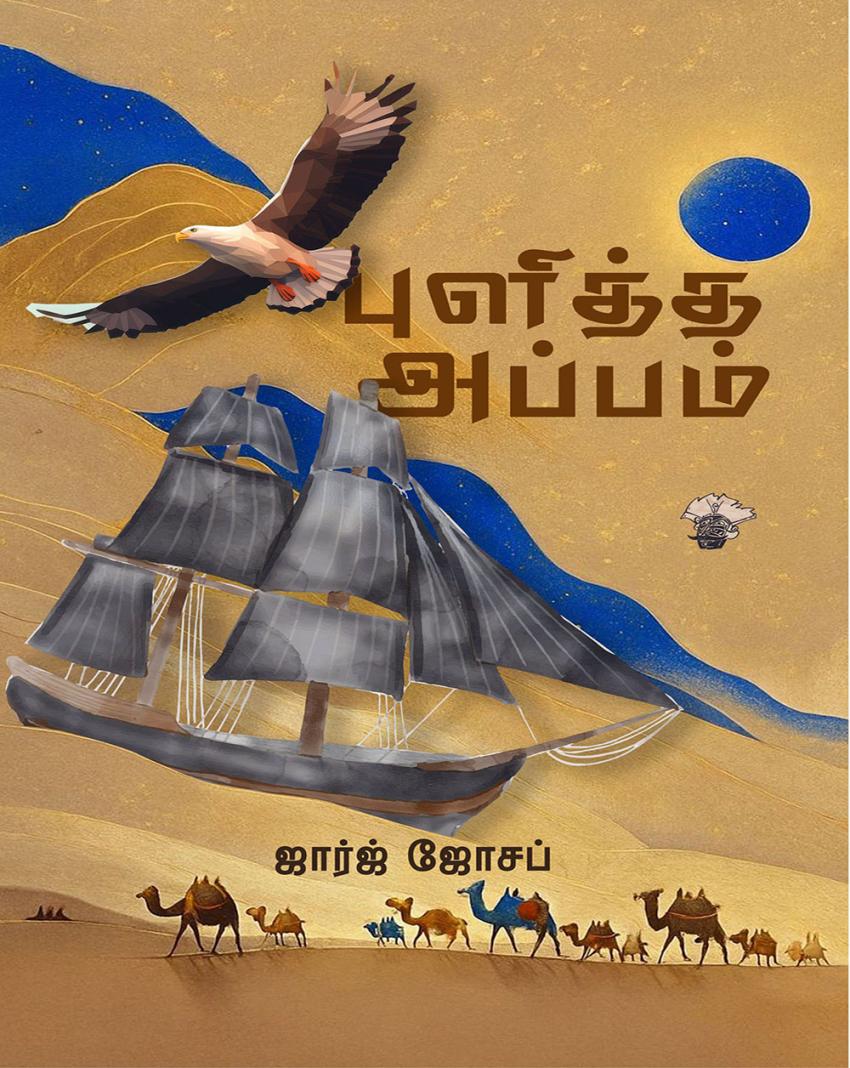
Though various social, political, and cultural realms have found their_locs in contemporary Tamil literature in various ways, the world of the everyday Christian communities in the state of Tamil Nadu has not. Puliththa Appam is one of the most important literary endeavors in this regard as it breaks the silence with utmost sensitivity. The author of the volume is George Joseph.
What is most distinct about புளித்த அப்பம் is not so much the subject matter as the storytelling craft that exudes confidence from the author’s pen. George Joseph’s stories do not need to resort to spectacle or drama. The stories emanate from lived experience the tension, the emotions that need not be expressed, the moral dilemmas, and the transformations that occur within the realm of the mundane. All stories are founded upon solid incidents, but it is the emotional subtext that remains long after the act of reading is over.
One of the most defining features of the book is itsünden multi-perspective method of story-telling. What this means is that instead of keeping the story within the remits of only one character’s perspective, the book uses multi-perspectives, courtesy of skilled writing. Some of the multi-perspectives may be social, others may be based on emotion, but the most important aspect is that it is more authentic compared to only having one perspective.
The three novellas form a part of this body of work and provide a completely different reading experience each time. These stories encompass faith and doubt, tradition and change, as well as belonging and alienation. These three novellas do not paint a romantic picture of life within a community or show the community as a conflict-ridden zone; instead, they provide a well-balanced and humane account of it all.
Language becomes very significant in creating the reading experience. George Joseph’s writing is subdued yet expressive, characterized by its clarity and innate confidence. His control over narrative rhythm enables him to offer stories that flow very smoothly into their emotional essence. Such linguistic sophistication does help in making the text easier to access while retaining its literary complexity.
For a reader interested in more meaningful literary work beyond the normal themes, this book comes as a welcomed change. This book is also important for a reader interested in finding novel books in Nagercoil since it appreciates very much the regional cultural phases that Nagercoil imbibes within it.
While many people in their search for an interesting novel story ‘books in nagercoil are seeking literature which blurs the lines between reality and plot, Puliththa Appam is a much-needed book in many ways, where it beckons readers not only to witness but to understand, to listen to the voices that have long been neglected by literature.
Finally, what emerges about Puliththa Appam is that it is more than just a series of stories-it is a truthful literary record of contemporary life that is filled with empathy and subtle power.
This book has been newly published by Kalachuvadu Publications.