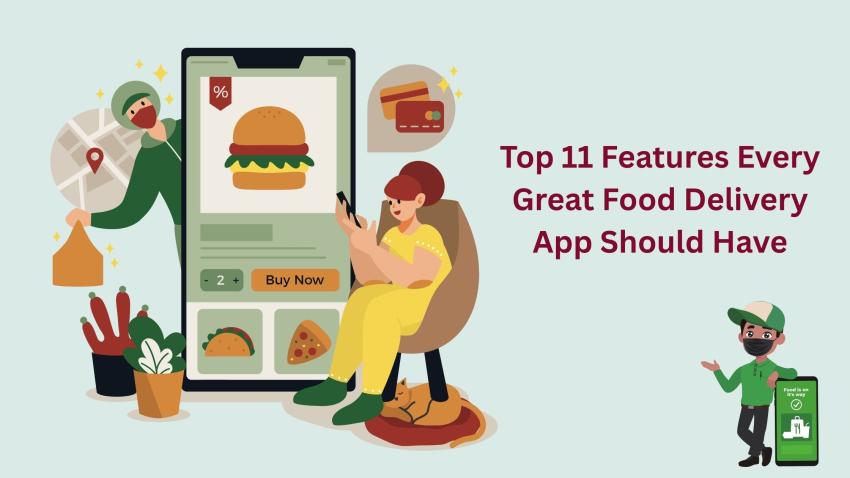
Food delivery apps are no longer a luxury — they’ve become a core part of daily life. From busy professionals to students and families, people now depend on mobile apps to bring meals to their doorsteps. With this demand comes competition, and not every app succeeds in gaining long-term users. This is where food delivery app development services come into play, helping businesses create apps that stand out in a crowded market.
A great food delivery app stands out by offering speed, simplicity, and reliability. Users expect more than just a list of restaurants. They want smooth interactions, accurate updates, and the feeling that the app works for them. If an app falls short, users won’t hesitate to delete it and try another.
This article breaks down the 11 features that separate top-performing food delivery apps from the rest. Whether you’re building a new platform or improving an existing one, these features play a critical role in your app’s success.
Why Feature Selection Matters in Food Delivery Apps
Feature selection ensures that a food delivery app is user-friendly, fast, and efficient. It helps focus on what really adds value to users and the business, without unnecessary complexity.
User Retention Starts with Functionality
People won’t stay on an app that causes frustration. If a user has to click too many times to place an order, or they can't track their delivery, they’ll leave. Features that simplify the process help retain users and lead to repeat orders.
Competition Demands Strong Differentiation
With dozens of food delivery options in every major city, standing out is tough. Apps that include smart, helpful features build loyalty and gain word-of-mouth traction. Your app doesn't need to reinvent the wheel — it just needs to work better than the rest.
Top 11 Features That Drive a Successful Food Delivery App
A successful food delivery app strikes a balance of user convenience, speed, and reliability. These 11 features are essential to stand out in a competitive market:
1. Easy Sign-Up and Login Options
First impressions count. If your app takes too long to register, users will move on. Great apps allow users to sign up in seconds using email, phone numbers, or social logins (like Google or Apple ID).
Equally important is giving users the option to log back in without friction. Features like biometric login or OTP (one-time password) help with faster access and higher security.
2. Real-Time Order Tracking
Once a user places an order, they expect to know where it is. Real-time tracking shows the progress of the food — from order confirmation to pickup to delivery.
This feature builds trust. It also reduces unnecessary calls to customer support, as users can track everything from their phones.
3. Multiple Payment Methods
Users want flexibility when paying for their orders. Credit cards, debit cards, digital wallets (like Apple Pay or Google Pay), and even cash-on-delivery should be available.
Adding local payment gateways also helps build trust with regional users. A wide range of payment options increases conversion and reduces cart abandonment.
4. Smart Search and Filters
A long restaurant list means nothing if users can't find what they want. Smart search tools that work with keywords, cuisines, or specific dish names help users order faster.
Filters like price range, delivery time, rating, and dietary preferences make the browsing experience faster and more convenient.
5. Restaurant and Menu Listings with Photos
Visuals matter. An app that displays clear, high-quality images of dishes and restaurants performs better than one with text-only menus.
Menu listings should include price, ingredients, add-ons, and availability. Users appreciate knowing what they’re getting before they place an order.
6. Custom Order and Special Instructions
People often have specific preferences. Whether it’s “no onions,” “extra cheese,” or “add cutlery,” users need a space to write these instructions.
Custom order notes give restaurants clarity and improve customer satisfaction. It’s a small feature that makes a big difference.
7. Estimated Delivery Time Display
Before placing an order, users want to know how long it will take. Apps that show estimated delivery time up front help users plan accordingly.
The delivery time should adjust in real-time based on factors like traffic, restaurant prep time, and driver availability. Accuracy here builds trust and improves repeat usage.
8. In-App Chat and Help Desk
Things don’t always go as planned. Maybe the driver is late, or the wrong dish was delivered. Users don’t want to switch platforms to fix these issues.
A built-in chat system lets users talk to support teams or even the delivery driver when necessary. Quick response times and a human approach make users feel supported and more likely to keep using the app.
9. Loyalty Programs and Discount Codes
People love to save money. Apps that offer rewards for frequent orders or referral bonuses tend to see higher retention.
Discount codes, promo campaigns, and loyalty points keep users coming back. But these should be easy to apply and not hidden behind complex steps or terms.
10. Push Notifications for Key Updates
Timely alerts help keep users informed. Whether it’s a confirmation message, a status update, or a special offer, push notifications make the experience smoother.
However, spamming users will backfire. Notifications should be relevant and spaced out. Let users control what types of alerts they want to receive.
11. Ratings, Reviews, and Feedback System
Feedback is essential. Users want to share their thoughts about restaurants, delivery experiences, and even app functionality.
Giving users the chance to rate and review helps improve your service. It also builds community trust, as other users often rely on reviews to make decisions.
Additional Considerations for Building a Scalable App
Scalability is key if you want your food delivery app to handle growing demand, new markets, and feature expansion without performance issues or downtime. Here are some critical considerations:
Reliable Backend Infrastructure
Your app needs more than just good design — it needs to run well under pressure. High server uptime, fast response rates, and robust databases are crucial.
Downtime or lag can cost you users and revenue. Invest in infrastructure that grows with your customer base.
Driver-Side App Functionality
A food delivery app isn’t just for customers. Drivers need their own version with tools like navigation, delivery queue, and earnings tracking.
Clear UI and accurate routing help drivers complete orders faster and reduce mistakes. Their experience directly affects the customer’s satisfaction.
Admin Dashboard for Restaurants and App Owners
Restaurants should have control over their listings. A back-end dashboard lets them update menus, pause orders during busy hours, and track performance.
App administrators also need dashboards to manage support tickets, view analytics, and monitor user activity. This data helps with better decision-making and growth.
Mistakes to Avoid in Food Delivery App Development
Even with the right features and vision, certain mistakes can hurt the app’s success. Avoiding these common pitfalls can save time, money, and future headaches.
Poor UI Decisions
An app might have all the right features, but if the layout confuses users, it won’t work. Keep screens clean, remove clutter, and ensure buttons are large enough for mobile use.
Test the app with real users to catch design problems early.
Weak Location Accuracy
One of the top reasons for failed deliveries is inaccurate location data. If your app can’t guide the driver properly, both the customer and the driver suffer.
Use reliable GPS services and allow users to adjust their location pin before confirming orders.
Conclusion
Building a successful food delivery app goes beyond basic ordering. Each feature — from login to payment, and from tracking to feedback — plays a role in the user’s overall experience. The best apps feel natural to use, solve real problems, and keep users coming back.
By focusing on features that save time, reduce confusion, and support both customers and delivery teams, you increase your chances of standing out in a crowded market. Every function should have a clear purpose and serve the end user’s needs.
If you’re launching a new food delivery app or improving an existing one, the 11 features above are a solid foundation to build on. The competition won’t wait — and neither will your users.