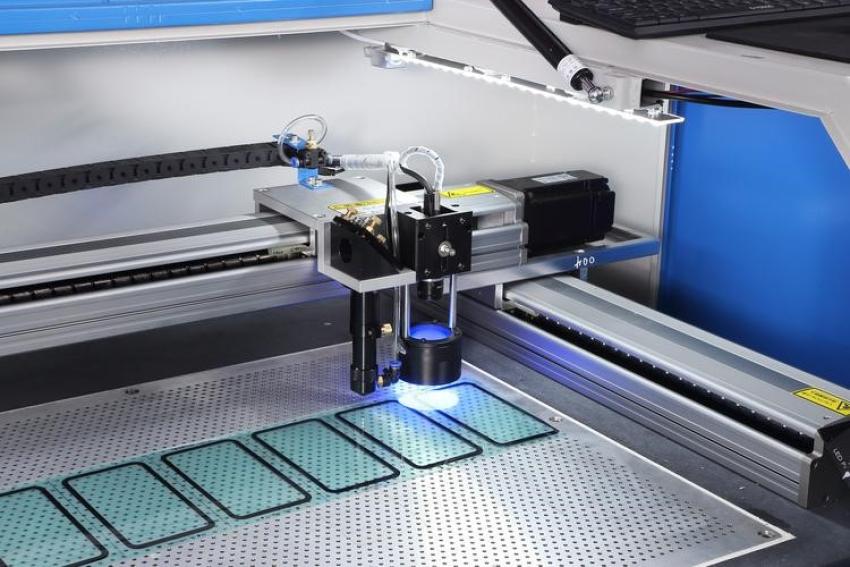
A precision laser cutting machine utilizes the use of a very focused laser beam to cut materials very precisely. It does not physically contact the material, and it does not wear mechanically by friction or abrasion, unlike traditional cutting tools. To produce clean, fine edges, the laser beam melts, burns, or vaporizes the target material. These are computer numerical control (CNC) operated and are directed to follow intricate cutting patterns that are programmed by the operators. The outcome is a controllable and repeatable cutting procedure suitable for complex designs. This technology is applicable to those industries where precision and quality are high.
How Does Laser Cutting Technology Work?
Laser cutting refers to the production of coherent light beams passed through lenses and mirrors. This beam is focused into a tiny area, therefore providing a lot of heat to be used in cutting through substances. Molten material is blown away by an assisting gas such as nitrogen or oxygen, which improves cut quality. The laser head is steered by the CNC system of the machine in X, Y, and in some cases, the Z axis, resulting in a complex 2D or 3D cut. The performance in diverse materials is optimized by adjusting of laser power and cutting speed. The combination will provide minimal thermal distortion and smooth product edges.
Materials Compatible with a precision laser cutting machine
The versatility of handling materials in carrying out a precision laser cutting machine is one of the greatest advantages. Fiber or CO2 lasers are commonly utilized in cutting metals like stainless steel, aluminum, brass, and titanium. Laser cutting is also good on non-metals such as acrylic, wood, leather, and plastics. Every material needs specific laser parameters of power, velocity, and gas flow to work with the best outcomes. Such flexibility enables manufacturers to apply a single machine to a wider volume of projects. It saves the tooling expense and also eases the workaround as opposed to the conventional mechanical procedure.
Industries Benefiting from Precision Laser Cutting
Accurate precision laser cutting machine are employed in numerous sectors where precision is paramount. Aerospace industries employ them to produce light components with strict tolerances. Car manufacturers utilize lasers to cut body panels and engine components accurately. Laser cutting ensures exact shapes for surgical instruments and implants in the production of medical devices. Architectural firms employ it to produce intricate models and decorative panels. The electronics industry also takes advantage of laser-cut circuit boards and enclosures.
Advantages Over Traditional Cutting Techniques
Unlike mechanical cutting processes such as sawing or stamping, laser cutting has several advantages. It generates very clean cuts that usually negate secondary finishing operations. The small laser kerf reduces material wastage, conserving resources and costs. Laser cutting is a non-contact process, avoiding tool and machine wear and tear. Rapid prototyping and fast changeovers are also possible without physical tooling modifications.
Key Features of Modern Laser Cutting Machines
New precision laser cutting machines are loaded with sophisticated features that boost productivity. Automated material loading systems facilitate constant operation with little or no human interaction. Real-time sensors check cutting quality and machine condition, and the operator can adjust them instantly. Touchscreen interfaces and intuitive software minimize programming and prevent operator mistakes. Most machines come with onboard safety enclosures and fume extraction systems to safeguard employees.
Challenges to Consider When Choosing Laser Cutting
Though laser cutting machines bring many advantages, some manufacturers have some challenges to mind. The initial investment in the cost of equipment is generally high, especially for fiber laser systems intended for thick metal cutting. Training in CNC programming, material handling, and maintenance for machine optimization is required for operators. Certain materials can produce dangerous fumes that need ventilation and safety precautions. Reflective materials and thick metals are harder to cut and may need special equipment.
Environmental and Efficiency Benefits
Laser precision cutting is an environmentally friendly process concerning most conventional approaches. It does not involve any physical cutting tools, with minimal waste and no need for consumables such as drills or blades. New fiber lasers are less energy-intensive than their predecessor CO2 lasers, thus being more environmentally friendly. Fume extraction systems remove harmful emissions, enhancing indoor air quality. The accuracy of laser cutting produces less scrap material, which encourages the efficient use of resources.
Conclusion
Precision laser cutting machines have transformed manufacturing by delivering unmatched accuracy, flexibility, and efficiency. Their ability to process a wide variety of materials and intricate designs benefits industries from aerospace to electronics. While investment and training are important considerations, the long-term advantages in quality and productivity are undeniable. Businesses aiming to stay competitive should explore the latest laser cutting technologies and automation features. For those ready to adopt cutting-edge solutions, HOYSOOK offers reliable and advanced precision laser cutting machines tailored to your needs.