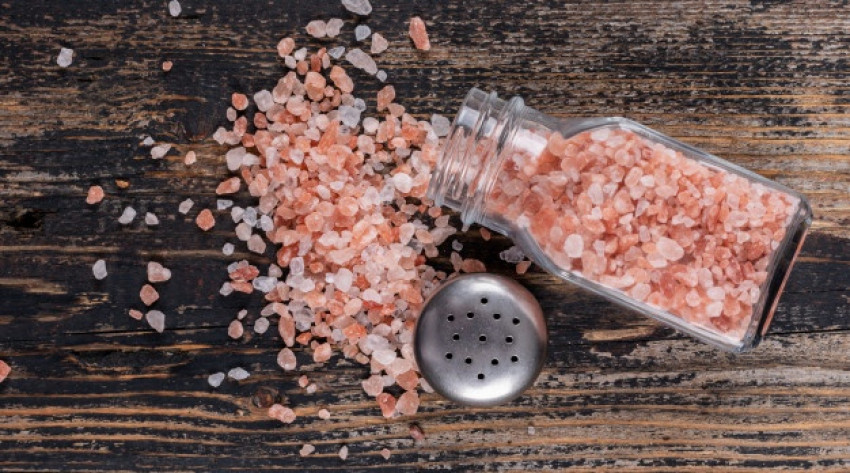
If you're confused by the comparison of Himalayan salt vs sea, you're not alone. There are numerous advantages to using this type of salt instead of the more common table variety. The first major advantage is the fact that it contains more minerals than table or rock salt. Compared to sea, it is softer and dissolves more easily, so it's ideal for seasoning delicate dishes like salads. On the other hand, sea-salt crystals can be moist, so they're not as effective as Himalayan-style crystals.
When it comes to salt, it's important to understand that these two varieties are not the same thing. While they are similar in appearance, each has a distinct flavor and mineral makeup. For example, table salt is made from underground salt. This form of salt has a different texture from sea salt, which is why it can be so beneficial for your body. While it can be used as a substitute for table-salt, it's not the best option for cooking.
Moreover, the texture of Himalayan salt is different than that of sea salt, and the texture is not the same. The latter is softer than the former, so it can be used interchangeably in a variety of dishes. However, if you're concerned with your health, you can opt for Himalayan salt instead. As both types of salt have many benefits, choosing them can make you feel better about yourself.
Another main advantage of using Himalayan salt is its low sodium content. A teaspoon of sea salt contains about 1,872 mg of sodium, whereas a teaspoon of Himalayan salt contains only 1680 mg. When comparing the two types of salt, you'll see that it's better for your health when compared to other salts. Both have unique health benefits, and are good for cooking. They can be used for everything from pasta to frying.
As far as the differences between the two types of salt, Himalayan salt is purer. While sea salt contains more trace minerals, it has little. Hence, it's better for you to buy Himalayan pink if you want a cleaner flavor. While sea salt is less expensive, it's a great way to save money. It is also more healthy than ordinary sea salt. The difference is a matter of preference.
The primary difference between the two types of salt is the price. Sea salt contains a higher amount of microplastics and metals, which can be harmful to your health. Moreover, Himalayan salt contains more beneficial elements. And, while it's more expensive than sea-salt, it's worth it to pay a little bit more. It's recommended for people who have a high sodium intake and are concerned about their diet.
The main difference between Himalayan salt and sea salt is that Himalayan salt has a lower sodium content than sea salt. Its pink color is a benefit, as it is more absorbable. Its higher sodium content makes it better for seasoning. On the other hand, the sea-salt is a more affordable option, but it doesn't have as many benefits as Himalayan salt.
While both salts have similar saltiness, the main difference between Himalayan salt and sea salt is the texture. While both types are used for the same purposes, they do differ in their process and purpose. Unlike table and rock salt, Himalayan salt is processed in a much larger factory, and the process is less time-consuming and less expensive. Meanwhile, sea salt is extracted from seawater and contains trace minerals and is better suited for the kitchen.
The main difference between Himalayan salt and sea-salt is in its composition. It is rich in minerals, but it's not as healthy as Himalayan. It has been found to be more toxic to humans and can contain microplastics and metals. The latter has fewer beneficial elements, while the latter is more natural. For this reason, it is better for your health. When choosing between the two types of salt, consider how they affect your daily routine.