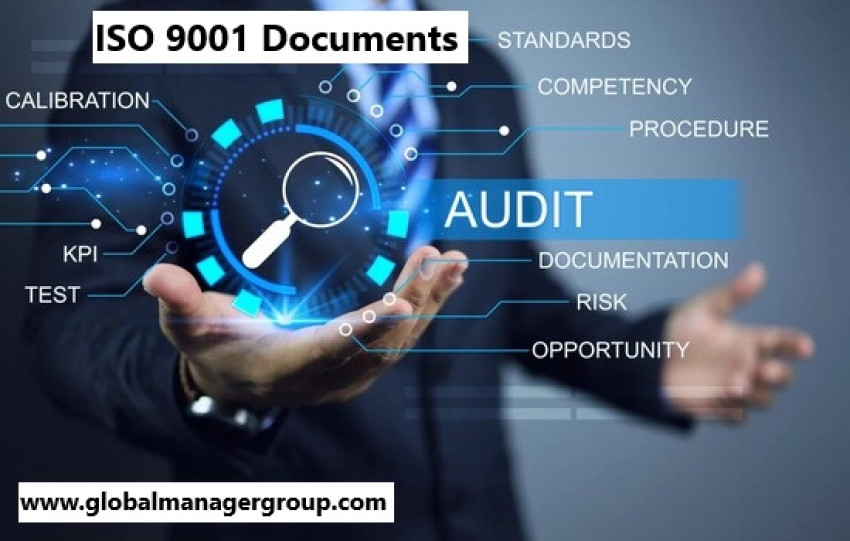
ISO 9001 is an international standard which is mainly focused on Quality Management Systems, gives businesses a basis for simplifying their operations and guaranteeing customer satisfaction. Even though ISO 9001 doesn't specifically require any particular processes, a few fundamental components are essential to attaining compliance and keeping a strong QMS.
An organization's operations are guided to achieve the intended goals by a collection of processes, requirements, and procedures known as a quality management system. Understanding the required processes for ISO 9001:2015 is crucial before adopting the process of adopting ISO 9001 standards.
Steps for Better Implementation of ISO 9001
The following six steps for ISO 9001 must be put into place:
1) Document Controls: A smooth business operation depends on maintaining effective communication. Organizations must comply with ISO 9001's criteria for documentation, monitor the supply of information, goods, and services, and set up appropriate document control, including ISO 9001 procedure templates and so on. By following this approach, the organization makes sure that all members have access to the most recent and accurate instructions and that appropriate records are kept.
a. Identification and Approval: Verify that every editable ISO 9001 documents for implemented Quality Management System is properly recognized, examined, approved, and distributed.
b. Change Management: Establish protocols to regulate document modifications, such as updates, alterations, and obsolescence.
c. Distribution: Ensure that documents are kept under control and given to the right staff members.
2) Control of Records: Organizations must set up a documented information process by IS0 9001 to manage the identification, retrieval, preservation, protection, and disposal of records, including design records. The main goal of recording the process is to demonstrate adherence to it and make data more easily accessible to boost corporate operations.
3) Internal Audit: An organization’s Quality Management System, which includes elements like design and development control, management review and tracking customer satisfaction, needs to be reviewed for effectiveness, which is why the ISO 9001 internal audit techniques are crucial. The audit will, for example, look into how you administer and apply for your Quality Management Systems. The risks that might compromise your compliance with internal and external standards are also identified and reduced with the aid of an internal audit. Additionally, it shows how well the organization is performing by evaluating the efficiency of internal controls in administrative, accounting, and financial reporting domains.
4) Management of Non-Conforming Products: It should be part of your quality management system's operations to find and fix non-conforming or unsatisfactory outputs. Customers or other stakeholders may identify the non-conforming products externally, while internal audits may identify them internally. The goal of the non-conforming output procedure control is to stop the supply or use of goods or services that don't meet the required standards of quality.
5) Remedial Approaches: Determining the cause of a problem, containing it, and creating suitable measures to stop it from happening again are all part of a corrective action. The process attempts to achieve your quality targets and get rid of annoying tasks from your everyday operations, which will enhance your company's overall performance.
6) Preventive Actions: Preventive actions are processes aimed at removing any possible source of non-conformity and guarantee the standard of goods and services provided by your company. As a result, the process entails suggesting appropriate courses of action to stop particular hazards from occurring. Organizations must record the suggested preventive actions by ISO 9001:2015 clause 8.53.