Introduction:
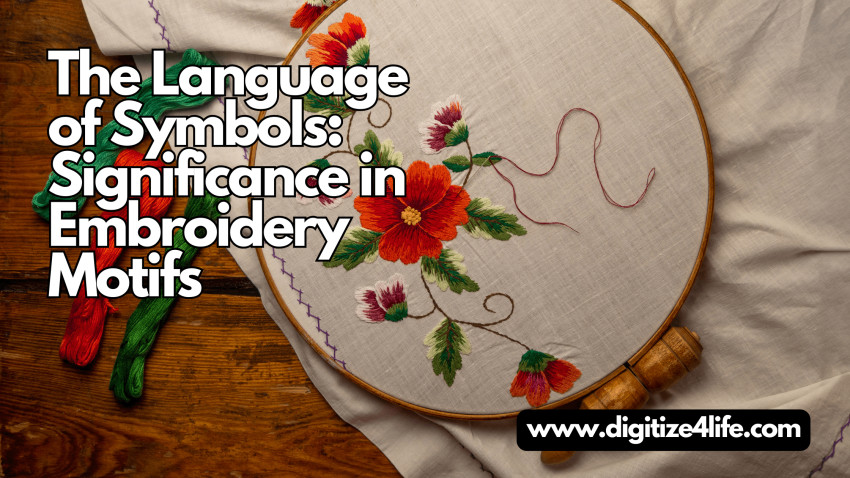
Embroidery is not just an art form; it is a language that has transmitted cultural credentials, ideals and values for hundreds of years. The intricate designs, patterns and motifs of the embroidery have deep meaning and each stitch tells part of a larger story. In this blog, we explore the meaning of embroidery motifs, their ancient roots and the cultural stories they carry.
A Brief History of Embroidery
Embroidery has been a part of human civilization for many years, and the earliest surviving examples date back to ancient Egypt, China and Persia. Initially, embroidery became the decoration of clothing and household items, but it quickly evolved into a sophisticated and inventive form of expression.
As unique cultures adopted and adapted embroidery, different patterns and motifs emerged. These motifs often had symbolic meaning, representing everything from religious ideals to social status and personal identification.
Cultural Importance of Embroidery Motifs
Flowers and Nature
Roses: In Western embroidery, roses are often a symbol of love and passion. Rose coloring can similarly express unique feelings, with pink symbolizing romantic love, white symbolizing purity, and yellow symbolizing friendship or jealousy.
Lotus: In Asian embroidery, especially Chinese and Indian traditions, the lotus flower symbolizes purity, enlightenment and rebirth. It often appears in sophisticated clothing styles and non-secular textiles.
Oak Leaves and Acorns: In many European traditions, oak leaves and acorns represent strength, endurance and longevity. They are often used in military insignia and heraldic embroidery.
Animals
Peacock: The peacock is a famous subject in many cultures, symbolizing beauty, immortality and contentment. Peacocks are often depicted in bright colors and intricate designs in Indian and Persian embroidery.
Dragon: In Chinese embroidery, the dragon is a powerful symbol of strength, protection and great luck. It is often used in formal wear and royal textiles.
Butterfly: Butterflies are symbols of transformation and alternative daily life. They are often used in Japanese and Mexican embroidery to deal with themes of transformation and new beginnings.
Geometric Patterns
Circles and Spirals: Circles and spirals are not uncommon motifs in Celtic embroidery, symbolizing eternity, continuity and the cyclical nature of existence. These patterns are often found on traditional clothing and ceremonial textiles.
Triangles: In many indigenous cultures, triangles represent the elements of earth, water and fire. In Mexican otomi embroidery, triangles are often mixed with animal motifs to create intricate and important patterns.
Diamonds: Diamond shapes are known in Eastern European embroidery and symbolize fertility, safety and God’s attention. They are often used in human costumes and household linen.
Religious and Spiritual Symbols in Embroidery
Crosses and Crucifixes
In Christian embroidery, the cross is an important theme that represents religion, salvation and the sacrifice of Jesus Christ. Various crosses, including Celtic and Greek crosses, can convey additional layers of meaning.
Mandala
In the Buddhist and Hindu traditions, the mandala is a spiritual image that represents the universe. Embroidered mandalas are used in meditation practices and as decorative elements in temples and houses.
Hamsa
The Hamsa, or Hand of Fatima, is a protective image in the Middle East and North Africa. It represents the hand of God and is thought to ward off evil and bring good luck.
Personal and Social Identity Through Embroidery
Family Crest and Coat of Arms
Historically, embroidered family crests and coats of arms were used to signify lineage, favor and heritage. However, these motifs are popular in modern embroidery design and are regularly used in custom designs for weddings and unique events.
Ethnic and Regional Identity
Embroidery is an effective means of expressing ethnic and local identity. For example, Tatreez’s intricate embroidery in Palestine is about the Palestinians, their history and connection to the land.
Similarly, the colorful styles of Mexican Huipil embroidery reflect the rich cultural heritage and creative traditions of the indigenous peoples.
Modern Interpretations of Traditional Motifs
Adapting embroidery, modern artists and designers reinterpret traditional motifs using modern methods. These modern variations often combine historical symbolism with modern lines, creating distinctive works that resonate with today’s audiences.
Mixing Motifs
Contemporary embroidery often combines motifs from extraordinary cultures and develops a fusion of symbolic meanings. This technique celebrates the diversity of embroidery traditions and highlights the universality of certain symbols.
Abstract and Minimalist Designs
While traditional embroidery is often characterized by problematic details, contemporary designs have sometimes embraced a minimalist aesthetic. Abstract representations of traditional motifs can convey the essence of a symbol without excessive complexity.
Digital Embroidery
The creation of digital embroidery technology has changed the shape of artwork, enabling special and intricate designs that were previously impossible. Digital embroidery features intricate patterns that combine traditional patterns with modern elements.
The Importance of Preserving the Symbolism of Embroidery
Preserving the symbolic meanings of embroidery motifs is essential to preserve the cultural background and promote a deeper knowledge of the art. Educating new generations about the historical and cultural significance of these symbols ensures that a rich embroidery heritage continues to flourish.
Education and Workshops
Many companies and artisans offer workshops and academic packages that focus on traditional embroidery techniques and symbolism. These projects are important to pass on knowledge and skills to future generations.
Documentation and Research
Documenting the meaning and origin of embroidery motifs is important to preserve their cultural significance. Scholars and historians are constantly trying to gather comprehensive information about embroidery traditions from different parts of the field.
Cultural Exchange
Promoting cooperation between cultural trade and different embroidery traditions can lead to a more versatile knowledge and appreciation of the art form. At exhibitions, parties and online structures, artists can share their work and explore each other.
Summary
The symbolic language of embroidery motifs suggests the deep connection of the work of art to cultural identity, records and private expression. Every stitch, swatch and fold is a story that weaves together the threads of culture and innovation. By providing information and appreciating the meaning of these symbols, we honor the rich historical past of the embroidery industry and ensure its vibrant future.
Embroidery is more than just decoration; it is a timeless story that speaks to the core of human creativity and culture. By discovering and enjoying the symbolic meanings of embroidery motifs, we keep alive the spirit of this historic art form, which combines the past, present and destiny.