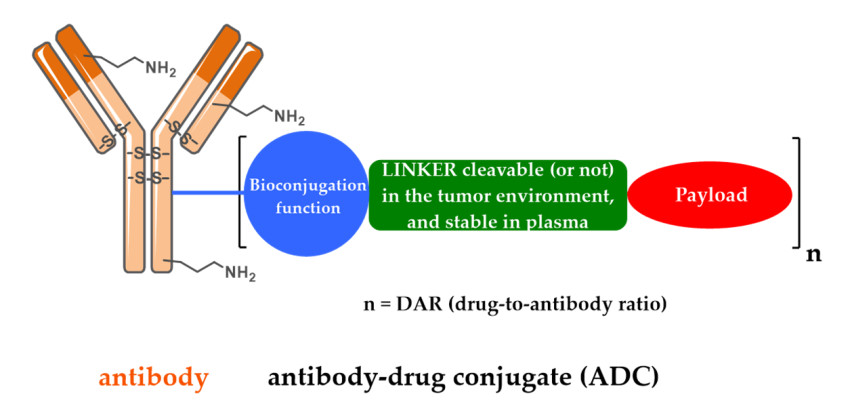
Antibody-drug conjugates (ADCs) are an emerging technology to overcome the limitations of chemotherapy by selectively targeting cancer cells. ADC binding to antigens, especially those overexpressed on the surface of cancer cells, reduces side effects caused by non-specific targeting and improves therapeutic index.
In an ideal ADC, the antibody is the key carrier that specifically binds to the target antigen, and the antibody must have high affinity and low immunogenicity for the target antigen. In addition, antibodies should have the ability to maintain a long plasma half-life and rapid internalization.
Immunoglobulin G (IgG) is the most common antibody type in ADC development due to the most abundant antibody class and ability to prime immune effectors. Furthermore, among different subtypes, IgG1 is the most commonly used antibody subtype in ADC development. IgG includes IgG1, IgG2, IgG3 and IgG4, four subtypes. These four isoforms are structurally different because they are encoded by different germ-line CH genes. They differ in the size of the hinge region and the number and arrangement of the interchain disulfide bonds linking the heavy chains. Subtle differences in amino acid sequence between IgG subclasses also affect their biological function. Among them, IgG1, IgG3 and IgG4 cross the placenta easily, but IgG2 crosses the placenta much less efficiently.
So why is IgG1 the commonly used subtype for ADCs?
1. Since IgG1 is the most abundant and stable in serum, it has a high affinity with Fc receptors and can induce: antibody-dependent cell-mediated cytotoxicity (ADCC), antibody-dependent cell-mediated phagocytosis (ADCP), and strong effector functions such as complement-dependent cytotoxicity (CDC). Therefore, these Fc-mediated effector functions also play a crucial role in the anticancer activity of ADC drugs.
2. IgG3 is rarely used. Look at the strange hinge region in the picture above. One of its distinctive features is that it has 11 interchain disulfide bonds. It is very unstable and easily degraded by some enzymes, so its half-life is very short, about a week or so, while the other three brothers are three weeks, so it is discarded.
3. IgG2 is easy to form dimers and multiple aggregations in the body, and the concentration of ADC drugs will become lower and lower.
4. IgG4 can induce antibody-dependent cell-mediated phagocytosis (ADCP), but IgG4 is an abnormally dynamic Fab arm exchange antibody, resulting in ineffective targeting and reduced efficacy.
Biopharma PEG, as a professional PEG supplier, offers a variety of PEG linkers to facilitate your drug development, such as antibody-drug conjugate (ADC), peptide drug conjugates (PDC), etc. All PEG linkers are of >95% purity and they are the basic building blocks for a successful ADC.