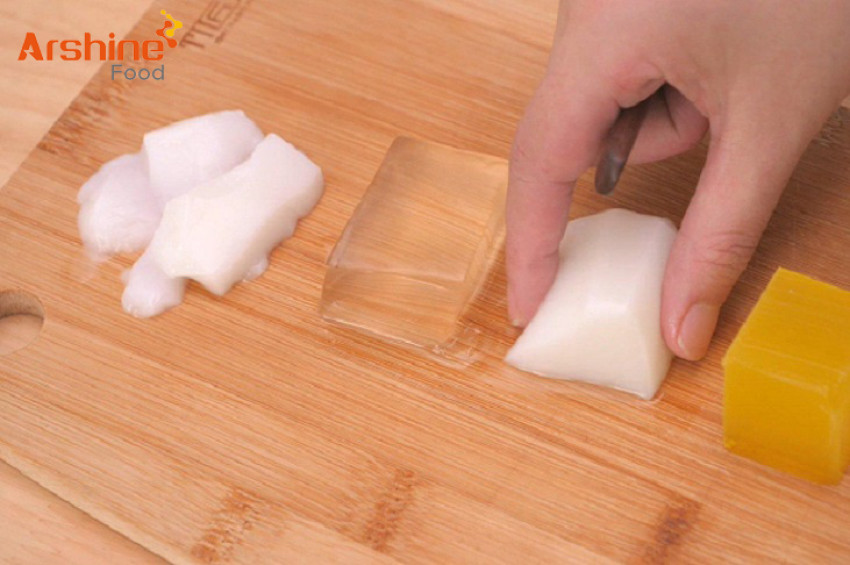
When making desserts such as mousse, frozen cheesecake, and pudding, gelatin is often used. Its main function is to solidify the dessert. For other desserts, another coagulant-agar will be used. Gelatin and agar, what's the difference? Can they replace each other?
Gelatin is transliterated from English Gelatine, also known as fish glue or gelatin. It is a gelatin extracted from animal bones, therefore, gelatin is not considered a vegetarian food. It is divided into flakes and powders, and the usage is similar. Both need to be soaked in cold water for a while (hot water is not allowed). After soaking, heat it until it melts, and add it to other ingredients according to the steps of the recipe.
Precautions for using gelatin:1. When heating the gelatine until it melts, do not overheat, otherwise it will affect the gelatin's solidification ability.
2. Unrefined gelatin will have a fishy smell, but the gelatin on the market is generally refined, has no peculiar smell, and can be used only after soaking until soft.
3. Gelatin powder and gelatin sheets can be used as substitutes for each other, and the dosage is the same (for example, 5 grams of gelatin sheets have the same coagulation power as 5 grams of gelatin powder).
4. When soaking soft gelatine powder, generally soak it with 3~4 times the weight of water. Because gelatin powder is not soaked like gelatin sheets, you can wring out excess water after soaking, so the water needs to be added to an appropriate amount at a time.
5. When making fruit-containing desserts such as papaya mousse, cook the fruit first. Because the enzymes in some fruits will decompose protein (the main component of gelatin is protein), so that the gelatin cannot solidify. Such fruits include kiwi, papaya, etc.
6. After the gelatine is soaked, it cannot be used immediately for some reasons. Please put it in the refrigerator and take it out when you use it.
agar
Agar, English name agar, is a coagulant made from seaweed, therefore, agar is a vegetarian food. Agar is less soluble than gelatin, and it needs to be boiled for a few minutes to completely melt in the water. Once the temperature is lower than 40°C, it will solidify immediately. Agar also needs to be soaked before use, and it will expand to 4 times its size after it is fully soaked. The taste of agar is harder than gelatin, and it is often used to make pastries such as yokan and cold cakes.
the difference between the two
1. The freezing point is different. Agar will solidify below 40°C, while gelatin must be refrigerated to solidify. Gelatin is mostly used in desserts such as mousse and pudding, and the stirring temperature is low. If agar is used, it will solidify into lumps before it is mixed well (especially when it is mixed with whipped cream, etc.), and it cannot be mixed evenly. up.
2. The taste is different. The taste of gelatine is softer and more elastic than that of agar. If agar is used for desserts such as mousse, it will completely lose its tender taste.
3. The storage conditions of the products are different. Desserts made of agar can be placed directly at room temperature even in summer (such as yokan, which is usually packaged and placed on the counter), while desserts made of gelatin need to be refrigerated to prevent melting.
https://www.arshinefood.com/detail/Industry-Information/gelatin-different-from-agar.html