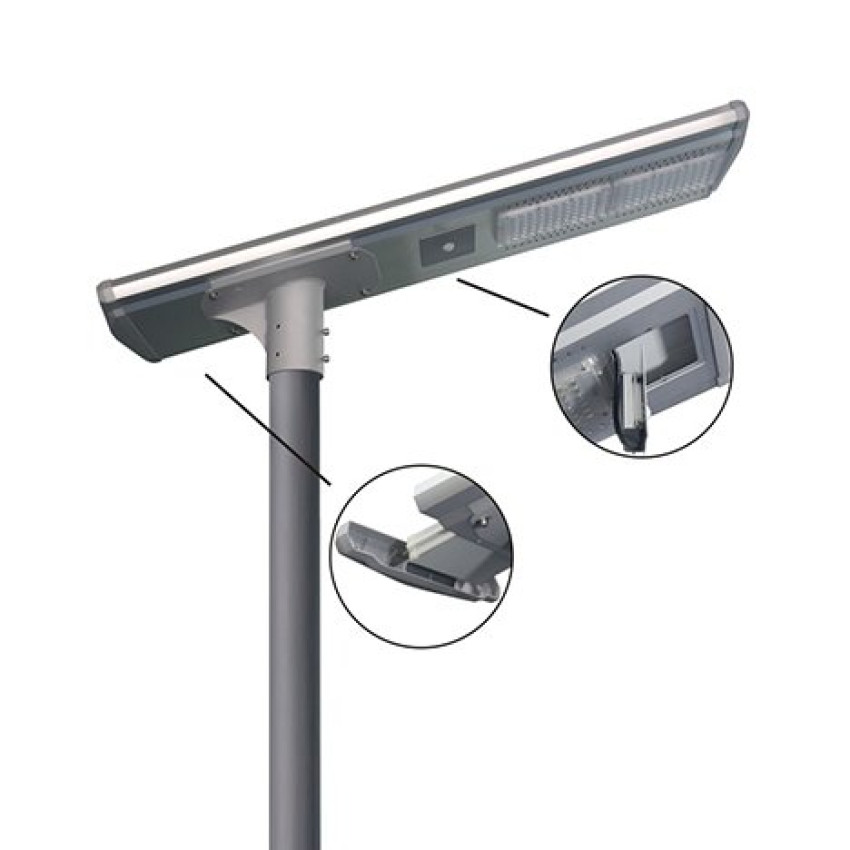
With the development of technology, most of the current street lamps are converted by solar photoelectricity, so that energy saving, safety and convenience can be achieved. Moreover, there is a solar street light controller inside, which can be controlled and displayed by a microprocessor. The intelligent charge and discharge controller uses high-quality, low-loss, and long-life components to ensure its reliable performance, so that the solar street light system can last for a long time. Normal work, reduce system maintenance costs. So what is the role of the solar street light controller?
1. Control function
The basic function of the solar street light controller is of course to have a control function. When the solar panel shines on the solar energy, the solar panel will charge the battery. At this time, the controller will automatically detect the charging voltage, so as to output voltage to the solar lamps. Only then will the solar street light shine.
2. Regulatory effect
When the sun shines on the solar panel, the solar panel will charge the battery, and its voltage is very unstable at this time. If it is charged directly, it may reduce the service life of the battery, and may even cause damage to the battery.
The controller has a voltage stabilizing function in it, and can carry out constant voltage and current limiting on the voltage input to the battery. When the battery is fully charged, it can charge a small part of the current, or not charge.
3. Boosting effect
The controller of the solar street light also has a boost function, that is, when the controller cannot detect the voltage output, the solar street light controller controls the output voltage from the output terminal. If the voltage of the battery is 24V, but it needs 36V to achieve normal lighting, Then the controller will increase the voltage to allow the battery to reach a level where the lights can be turned on. This function is to be able to realize the lighting of LED lights through the solar street light controller.
2. Regulatory effect
When the sun shines on the solar panel, the solar panel will charge the battery, and its voltage is very unstable at this time. If it is charged directly, it may reduce the service life of the battery, and may even cause damage to the battery.
The controller has a voltage stabilizing function in it, and can carry out constant voltage and current limiting on the voltage input to the battery. When the battery is fully charged, it can charge a small part of the current, or not charge.
3. Boosting effect
The controller of the solar street light also has a boost function, that is, when the controller cannot detect the voltage output, the solar street light controller controls the output voltage from the output terminal. If the voltage of the battery is 24V, but it needs 36V to achieve normal lighting, Then the controller will increase the voltage to allow the battery to reach a level where the lights can be turned on. This function is to be able to realize the lighting of LED lights through the solar street light controller.
https://www.bilingsolar.com/blog/detailed-explanation-of-the-function-of-solar-street-light-controller